


Chessfire: Shotgun Chess
Lumid Labs UG (haftungsbeschränkt)
I went into Chessfire: Shotgun Chess expecting a familiar board game with a small twist, but its appeal is better understood as a strategy game built around chess ideas rather than a simple replacement for a traditional chess app. The store summary, “Blast Your Way to Victory!”, points to a more aggressive identity, while the short description calls it “Chessfire.” That combination immediately sets a different expectation: this is aimed at players who enjoy planning, pressure and tactical decisions, but want something less formal than a standard chess match.
It is a free game from Lumid Labs UG (haftungsbeschränkt), listed in the strategy category for everyone. That makes it easy to try without committing money at the start. The current version is 1.21.1, and it runs on Android devices using version 7.0 or later. I would still treat the free entry point as the main value proposition rather than assuming that every part of the experience is included without cost, because optional in-app purchases range from $1.99 to $99.99 per item.
How the game feels when you actually spend time with it
The strongest first impression is that Chessfire: Shotgun Chess wants me to think in terms of immediate threats. Traditional chess often rewards quiet development, long-term structure and patience before the position becomes sharp. This game’s identity suggests a faster, more explosive approach, where recognizing an opening, spotting danger and choosing when to attack matter more than following a textbook sequence.
That does not make it a mindless action game. The strategy label is important. A player still needs to read the board, anticipate a response and avoid spending an advantage too quickly. The difference is in the mood and rhythm. Instead of treating every move as part of a centuries-old system, I found the concept more inviting for short sessions in which I want the satisfaction of making a meaningful decision without settling into the seriousness of a full conventional chess routine.
For someone who already plays chess, the attraction is the change of context. Familiar instincts such as controlling space, protecting valuable pieces and creating multiple threats remain useful, but the game’s “shotgun” identity encourages a more direct mindset. I would not approach it as a pure training tool for tournament chess. It is better viewed as a separate strategy experience that borrows the language of chess while giving aggression and surprise a larger role.
Related News






For a newcomer, that distinction matters. A person who has never learned chess may still enjoy the theme, but the game is unlikely to remove every learning barrier associated with board strategy. You still need to understand what is happening on the board and why a move matters. I would recommend starting slowly, watching how each exchange changes the next decision, and resisting the temptation to attack simply because the game feels explosive.
One useful habit is to pause before every apparently powerful move and ask two questions: what does this move threaten, and what does it leave undefended? That simple check is especially valuable in an aggressive game. A flashy attack can be less useful than a modest move that limits the opponent’s choices. In my experience, the most satisfying moments come from setting up pressure rather than reacting to every opportunity immediately.
Why the chess foundation still matters
The game’s unusual premise does not eliminate the value of basic board-reading. I found that the best way to improve was not to memorize opening patterns, but to track the board in layers. First I looked for immediate danger. Then I considered which pieces or positions would remain useful after the exchange. Finally, I checked whether my move created a new weakness behind the attack.
Gallery
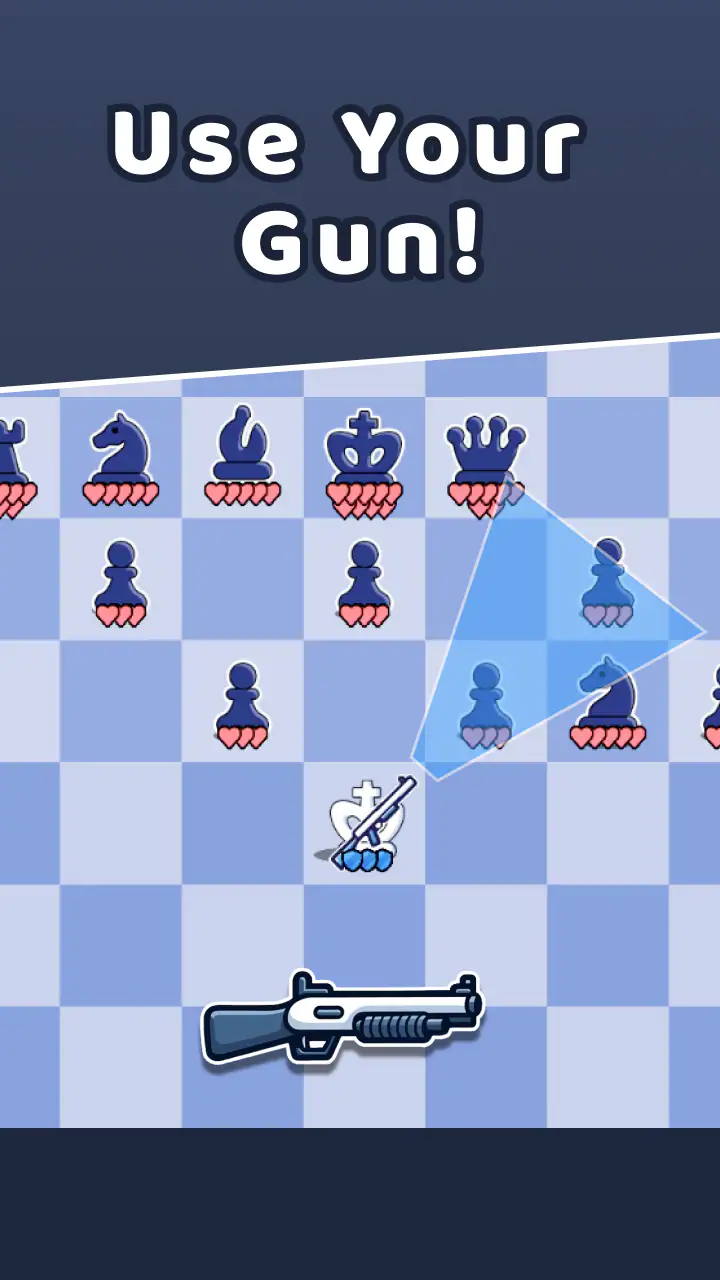
This three-step approach helps prevent a common mistake: confusing activity with progress. An aggressive move can look impressive while giving the other side a simple counter. Chessfire: Shotgun Chess is more enjoyable when I treat its action-oriented presentation as an invitation to calculate, not as permission to move impulsively.
Another practical tip is to review the position after every major exchange instead of continuing with the original plan. Once pieces disappear or the balance changes, the board’s priorities change too. A plan that made sense moments earlier may now be wasteful. This is a small discipline, but it turns the game from a sequence of exciting moves into a more deliberate strategy exercise.
That also gives the game value beyond quick entertainment. It encourages pattern recognition, risk assessment and flexible planning. Those skills are useful for players who enjoy strategy games generally, even if they do not want to study standard chess openings. The experience rewards attention more than speed of tapping or familiarity with a large content catalogue.
Free access and what the purchase range means
The important cost fact is straightforward: the game is free to download and play at the entry level. That makes the decision easy for a curious player. You can see whether the chess-inspired design suits you before paying anything, which is exactly how I would approach it. There is no reason to buy an item merely because the game is installed.
Optional purchases are listed between $1.99 and $99.99 per item. That is a wide range, so I would be careful about treating the game as automatically inexpensive just because the initial download costs nothing. The free version should be judged on its own ability to provide an enjoyable strategy session. Purchases should be considered extras, not part of the basic justification for installing it.
For me, this changes the value question. The game earns its place on a phone if the free experience gives me enough reason to return, whether that means experimenting with tactics, playing during short breaks or enjoying the unusual blend of chess structure and explosive presentation. If the free portion feels restrictive, then the higher end of the purchase range becomes much more significant, and I would want to understand exactly what an item adds before spending.
I would also recommend setting a personal spending limit before exploring optional items. That is not a criticism of Lumid Labs UG (haftungsbeschränkt); it is simply sensible whenever a free game presents purchases at very different prices. A small one-time purchase can feel reasonable, while repeated buying can change the real cost quickly. The right value depends on how often you play and whether the added content improves your decisions rather than merely extending access.
In practical terms, the game is easiest to recommend to someone who wants a free experiment. It is harder to recommend as a guaranteed bargain for a player who expects a complete, premium-style package with no temptation to spend. Those are different expectations, and Chessfire: Shotgun Chess should be evaluated according to the first one unless you have already checked what the optional items provide.
Where it differs from ordinary chess apps
A conventional chess app is usually the better choice when your main goal is formal improvement. Those apps tend to focus on standard rules, recognizable notation, structured lessons, puzzles or serious match analysis. Chessfire: Shotgun Chess appeals for another reason: it makes the board feel more like a tactical playground than a classroom.
That difference is useful when ordinary chess starts to feel too rigid. I can imagine opening this game after a long day because I want strategic thinking without committing to the atmosphere of a serious study session. The aggressive theme gives each decision more personality, while the underlying board logic keeps the experience from becoming entirely random.
On the other hand, a player preparing for rated competition should not make this the only chess-related app on a device. The game’s value is in its distinct format, not in replacing every conventional chess resource. If you need exact practice for standard tournament positions, a traditional chess platform will likely be more appropriate. If you want a creative variation that makes tactical thinking feel more immediate, this one has a clearer reason to exist.
It also differs from many broad strategy games that rely on large maps, resource systems or lengthy campaigns. Here, the appeal is concentrated around the board and the decision in front of you. That can be a strength for a player who dislikes complicated menus and sprawling progression. It can also be a weakness for someone who needs a deep world, a long narrative or many different systems to stay interested.
Small habits that make sessions more rewarding
I found that the best short-session routine is to begin with a goal rather than simply trying to win. One session might focus on avoiding unnecessary exchanges. Another might focus on creating two threats before attacking. A third might focus on protecting the most active piece. These goals make losses informative and stop the game from becoming a repetitive search for the quickest attack.
A second useful habit is to identify the opponent’s strongest reply before committing to an aggressive move. Players naturally imagine the response they want to see, especially in a game built around explosive action. Deliberately searching for the most annoying reply exposes weak attacks early. This is one of the more valuable lessons the game can teach because it applies to almost every strategy game.
I also recommend playing with a short reset between matches. When a plan fails, immediately starting another round can encourage the same mistake. Taking a moment to name the error—overextension, poor protection or ignoring a counter-threat—makes the next session more purposeful. That approach is particularly helpful for younger players, who may enjoy the accessible theme while still learning how to turn frustration into improvement.
For an everyday example, imagine having ten or fifteen minutes while waiting for an appointment. A full traditional chess study session may feel too demanding, while a large strategy game may take too long to load into a meaningful state. This is where the game’s focused concept can work well: you can make a few careful decisions, test an attacking idea and leave with a clear sense of what happened. The same scenario can work during a commute if the device and surroundings allow you to concentrate safely.
Who will get the most from it
The best match is a player who likes chess principles but wants a less formal presentation. You will probably enjoy it if you like spotting tactical opportunities, changing plans when the board shifts and learning through repeated experiments. It is also a sensible choice for someone looking for a free strategy game that can be tested in small sessions rather than requiring a large initial commitment.
Families may appreciate the everyone age rating, especially when looking for a strategy-themed game without an older age classification. Even so, the age label does not mean every child will understand the decisions immediately. Younger players may need time to learn why a move succeeds or fails. Playing together and asking them to explain their plan can turn the game into a useful logic exercise instead of just a contest.
Existing chess players may enjoy the novelty, but they should arrive with flexible expectations. If you want a faithful digital chessboard, this is probably not the first app I would choose. If you want to challenge your normal habits and see how you respond to a more forceful chess-inspired format, it becomes much more interesting.
I would skip it if you dislike board games, find tactical repetition tiring or prefer strategy titles with extensive progression and storytelling. I would also skip it as a primary training companion if your only objective is to improve at standard chess under conventional conditions. In that situation, the usual chess alternatives are more direct and easier to measure.
Reach, maturity and practical confidence
The game has built a noticeable audience, with over one hundred thousand installs and an average rating of four and a half from around one thousand eight hundred ratings. I read that as encouraging evidence that the concept connects with players, though popularity alone cannot tell me whether it will suit my own taste. The review count is around one hundred sixty, which gives the rating some context without turning it into a guarantee.
Its release date was September 27, 2024, so I see it as a relatively recent entry rather than a long-established chess standard. That makes the version number worth checking when installing or returning after a break: the current release is 1.21.1. Keeping the game updated is especially sensible for a newer title, since ongoing development can affect how polished the experience feels over time.
The Android requirement is modest enough for devices running Android 7.0 or newer. That broad compatibility makes it accessible to people who do not use a recent phone, although actual comfort will still depend on the device’s screen, responsiveness and battery condition. A small screen may make board positions harder to read during intense moments, so I would avoid judging the game after only a rushed test on an uncomfortable display.
Because the game is free to start, the safest approach is practical: install it, play enough sessions to see whether the board decisions remain interesting, and only then think about optional purchases. The rating and install count make it worth investigating, but the decision should ultimately come from how well its particular style fits your habits.
My verdict on value
Chessfire: Shotgun Chess is a worthwhile free trial for players who want strategy with a sharper, more explosive personality than ordinary chess. I like that it does not need to compete directly with every serious chess app. Its appeal comes from changing the mood of the board: it encourages tactical confidence, but it still rewards careful reading and restraint.
The trade-off is clear. You get an accessible entry point and a distinctive idea, but you should not confuse that with a complete substitute for traditional chess study. The optional purchase range also means I would keep spending disciplined and judge every item by the extra value it delivers. Free access is the strongest part of the offer; paid value depends on whether the additions genuinely deepen your interest.
My recommendation is to try it if you enjoy chess concepts, quick strategy sessions and the thrill of setting up an attack. Give it a fair test using deliberate goals instead of chasing flashy moves. If you want formal instruction, tournament preparation or a large campaign, choose a conventional chess or strategy alternative instead. For everyone else, the best reason to install it is its unusual balance of familiar board thinking and aggressive game identity.
After spending time with it, I would keep it installed as a change-of-pace strategy game rather than as my only chess app. That is a positive recommendation, but a specific one. It succeeds when I want to think quickly, take calculated risks and enjoy a fresh spin on a board format I already understand. It is less convincing when I need depth in the traditional sense. For a free download, that makes the experiment easy to justify, provided I remember that the game’s real value comes from its play style—not from assuming every optional purchase is necessary.
FAQs for Chessfire: Shotgun Chess
What is Chessfire: Shotgun Chess?
Chessfire: Shotgun Chess is a chess-inspired strategy game that changes the traditional rules by introducing explosive attacks and faster, more chaotic battles. Instead of relying only on standard captures, players must think about blast effects, positioning, and timing. It is designed for people who enjoy chess but want a more action-oriented and unpredictable experience on mobile.
How is Shotgun Chess different from traditional chess?
The main difference is the shotgun-style attack system, which can affect more than one piece or create dangerous areas around a target, depending on the game’s rules and current mode. This makes familiar chess principles less reliable. Protecting the king remains important, but players must also consider splash damage, surprise attacks, and the possibility that a single move can change the entire board.
Is Chessfire: Shotgun Chess suitable for beginners?
Yes, beginners can enjoy Chessfire: Shotgun Chess, especially if they are comfortable learning through experimentation. However, players who already understand basic chess movement may adapt more quickly because the game still rewards planning, control of key squares, and careful positioning. New users should begin with easier matches or practice options, then gradually explore more advanced strategies as they understand the explosive mechanics.
Can I play Chessfire: Shotgun Chess offline or against other players?
The available play options may depend on the version installed and the platform you use. Chessfire: Shotgun Chess is best approached as a game that can offer quick matches against computer-controlled opponents and, where supported, competitive play against other users. Before downloading, check the store listing for current online, offline, multiplayer, and account requirements, since these features can change through updates.
Is Chessfire: Shotgun Chess free to download, and does it include in-app purchases?
Chessfire: Shotgun Chess may be available as a free download, but users should review the official Google Play or App Store listing for the latest pricing details. Free mobile games can include advertisements, optional purchases, cosmetic items, or other paid features. We recommend checking the permissions, age rating, privacy information, and purchase settings before installing, particularly if children may access the device.
Pros
- Fast matches make it easy to play during short breaks.
- Shotgun rules create fresh tactical challenges for chess fans.
- Simple controls are well suited to touchscreen play.
- Quick restarts encourage experimentation with different strategies.
- The unusual format offers a fun change from standard chess.
Cons
- The variant may feel confusing to players expecting traditional chess.
- Random or explosive mechanics can make outcomes feel less predictable.
- The player base may be smaller than that of mainstream chess apps.
- Limited strategic depth may reduce long-term appeal for experts.
- Ads or in-app purchases may interrupt the otherwise quick gameplay.


